
About this book
Harold Bloom explores our Western literary tradition by concentrating on the works of twenty-six authors central to the Canon. He argues against ideology in literary criticism; he laments the loss of intellectual and aesthetic standards; he deplores multiculturalism, Marxism, feminism, neoconservatism, Afrocentrism, and the New Historicism.
Insisting instead upon "the autonomy of the aesthetic," Bloom places Shakespeare at the center of the Western Canon. Shakespeare has become the touchstone for all writers who come before and after him, whether playwrights poets or storytellers. In the creation of character, Bloom maintains, Shakespeare has no true precursor and has left no one after him untouched.
Milton, Samuel Johnson, Goethe, Ibsen, Joyce, and Beckett were all indebted to him; Tolstoy and Freud rebelled against him; and Dante, Wordsworth, Austen, Dickens, Whitman, Dickinson, Proust, the modern Hispanic and Portuguese writers Borges, Neruda, and Pessoa are exquisite examples of how canonical writing is born of an originality fused with tradition. Bloom concludes this provocative, trenchant work with a complete list of essential writers and books - his vision of the Canon.
- Canon (Literature)
- Literature
- History and criticism
- Religious aspects of Literature
- Religious aspects
- Littérature
- Literatura
- Letterkunde
Books like The Western canon
More by Harold Bloom
 How to read and why2000
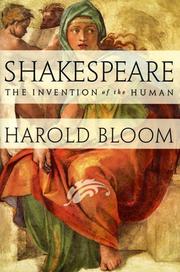 Shakespeare1998
 Bloom's Notes1996
 Sylvia Plath's The Bell Jar2009
 To kill a mockingbird1961
 Modern Critical Interpretations. Lord of the Flies1998
 Gabriel Garcias Marquez's Love In The Time Of Cholera2005
 The Best Poems of the English Language2004
 Ray Bradbury's Fahrenheit 4512006
 Elie Wiesel's Night2009
 Hamlet2003
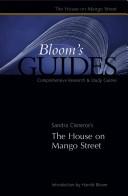 Sandra Ciserno's The house on Mango Street2003