
About this book
Before the Renaissance and Reformation, holy images - the only independent images then in existence - were treated not as "art" but as objects of veneration. The faithful believed that these images, through their likeness to the person represented, became a tangible presence of the Holy and were able to work miracles, deliver oracles, and bring victory on the battlefield. In this magisterial book, one of the world's leading scholars of medieval art traces the long history of the image and its changing role in European culture. Belting's study of the iconic portrait opens in late antiquity, when Christianity reversed its original ban on images, adapted the cult images of the "pagans," and began developing an iconography of its own. The heart of the work focuses on the Middle Ages, both East and West, when images of God and the saints underwent many significant changes either as icons or as statues. The final section of Likeness and Presence surveys the Reformation and Renaissance periods, when new attitudes toward images inaugurated what Belting calls the "era of art" that continues to the present day - an era during which the aesthetic quality has become the dominant aspect of the image. Belting neither "explains" images nor pretends that images explain themselves. Rather, he works from the conviction that images reveal their meaning best by their use.
- Icons
- Christian saints
- Christian art and symbolism
- Saints
- Cult
- Art, history
- Saints, cult
- Arte sacra
Books like Likeness and Presence
More by Hans Belting
 An Anthropology of Images2011
- The image and its public in the Middle AgesThe image and its public in the Middle Ages1990
 The end of the history of art?1987
 The mosaics and frescoes of St. Mary Pammakaristos (Fethiye Camii) at Istanbul1978
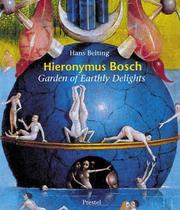 Hieronymus Bosch, Garden of earthly delights2002
 Florence and Baghdad2011
 Florenz und Bagdad2008
 Thomas Struth1993
 The Invisible Masterpiece2001
 Faces2013
 The Global Contemporary And The Rise Of New Art Worlds2013
 Art history after modernism2003