
Sobre este libro
Overview: In a world confronted by conflicting moral beliefs and values, the question is often raised, "Can science help us to solve our moral problems?" Many people today believe that moral principles are derived from religion. Their critics point out that the great religions often vehemently disagree about what is good, bad, right, and wrong. On the other side of a great divide stand many who say that there are no ethical standards at all and that morality is merely a question of personal taste or cultural relativity. This volume presents a unique collection of authors who generally maintain that science can help us make wise choices and that an increase in scientific knowledge can help modify our ethical values and bring new ethical principles into social awareness. Among the thirty contributors to this volume are distinguished scientists and philosophers, including Arthur Caplan, Mario Bunge, Vern Bullough, Thomas Szasz, Scott Lilienfeld, Susan Haack, and others. Among the wide-ranging topics discussed are bio-genetic engineering, stem cell research, organ transplants, human enhancement, abortion, euthanasia, psychiatry, and psychotherapy. Editor Paul Kurtz maintains that there is a modified form of naturalistic ethics that is directly relevant to both science and ethics and provides guidelines for our moral choices.
- Bioethical Issues
- Moral and ethical aspects
- Ethik
- Science
- Naturwissenschaften
- Ethics
- Science, moral and ethical aspects
Libros como Science and Ethics
Más de Paul Kurtz
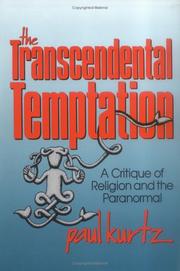 The Transcendental Temptation1986
 Dewey's enduring impact2010
 Exuberant skepticism2010
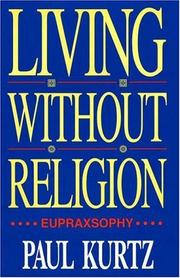 Living Without Religion1994
 Science and religion2003
- The future of naturalismThe future of naturalism2009
 Toward a new enlightenment1991
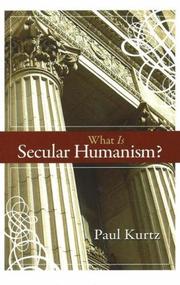 What is secular humanism?2006
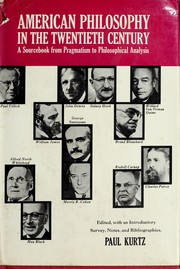 American philosophy in the twentieth century1966
 Exuberance1977
 The humanist alternative1973
 Humanist manifesto 20001999