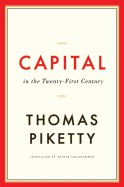
Le capital au XXIe siècle
Publicado por primera vez en 2013 · 816 páginas
Sobre este libro
What are the grand dynamics that drive the accumulation and distribution of capital? Questions about the long-term evolution of inequality, the concentration of wealth, and the prospects for economic growth lie at the heart of political economy. But satisfactory answers have been hard to find for lack of adequate data and clear guiding theories. In Capital in the Twenty-First Century, Thomas Piketty analyzes a unique collection of data from twenty countries, ranging as far back as the eighteenth century, to uncover key economic and social patterns. His findings will transform debate and set the agenda for the next generation of thought about wealth and inequality.
Piketty shows that modern economic growth and the diffusion of knowledge have allowed us to avoid inequalities on the apocalyptic scale predicted by Karl Marx. But we have not modified the deep structures of capital and inequality as much as we thought in the optimistic decades following World War II. The main driver of inequality--the tendency of returns on capital to exceed the rate of economic growth--today threatens to generate extreme inequalities that stir discontent and undermine democratic values. But economic trends are not acts of God. Political action has curbed dangerous inequalities in the past, Piketty says, and may do so again.
- Capitalism
- wealth
- capital
- inequality
- social welfare
- democracy
- Wohlstand
- Income distribution
Libros como Le capital au XXIe siècle
Más de Thomas Piketty
 Capital and Ideology2010
 Brief History of Equality2021
 Economie des inégalités1997
 Why save the bankers?2016
 Time for Socialism Dispatches from a World on Fire, 2016-20212021
 ¡Viva el socialismo!2021
 Cultures of Contagion2021
 Racisme meten, discriminatie bestrijden2023
 Chronicles2016
 La crisis del capital en el siglo XXI2015
 Yirmi Birinci Yüzyilda Kapital2000
 Vivement le socialisme !. Chroniques 2016-20202020