
Sobre este libro
Linchpin of the Soviet system and exemplar of its ideology, Moscow was nonetheless instrumental in the Soviet Union's demise. It was in this metropolis of nine million people that Boris Yeltsin, during two frustrating years as the city's party boss, began his move away from Communist orthodoxy. Colton charts the general course of events that led to this move, tracing the political and social developments that have given the city its modern character.
He shows how the monolith of Soviet power broke down in the process of metropolitan governance, where the constraints of censorship and party oversight could not keep up with proliferating points of view, haphazard integration, and recurrent deviation from approved rules and goals. Everything that goes into making a city - from town planning, housing, and retail services to environmental and architectural concernsfigures in Colton's account of what makes Moscow unique. He shows us how these aspects of the city's organization, and the actions of leaders and elite groups within them, coordinated or conflicted with the overall power structure and policy imperatives of the Soviet Union.
Against this background, Colton explores the growth of the anti-Communist revolution in Moscow politics, as well as fledgling attempts to establish democratic institutions and a market economy.
- Politics and government
- Municipal government
- History
- Moscow (russia), history
- Municipal government, soviet union
- Urban policy
Libros como Moscow
Más de Timothy J. Colton
 Patterns in post-Soviet leadership1995
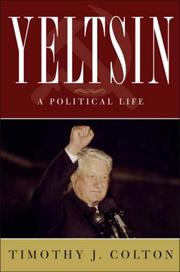 Yeltsin2008
 Russia2016
 Commissars, commanders, and civilian authority1979
- Soldiers and the Soviet StateSoldiers and the Soviet State1990
 Big Daddy1980
 The dilemma of reform in the Soviet Union1984
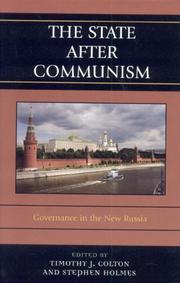 The State after Communism2006
 Transitional Citizens2000
 Independent Belarus2002
- ЕльцинЕльцин2013
 Growing pains1998