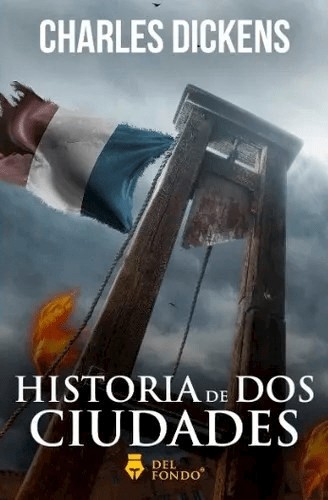
Cuento de dos ciudades
Título original: A Tale of Two Cities · Publicado por primera vez en 1859 · 388 páginas · unas 6 horas de lectura
También en Kindle · AudiolibroLeer gratis en Project Gutenberg · Buscar en una biblioteca
Sobre este libro
A Tale of Two Cities es una novela histórica publicada en 1859 por Charles Dickens, ambientada en Londres y París antes y durante la Revolución Francesa. La novela narra la historia del doctor Manette, un francés que pasó 18 años encarcelado en la Bastilla de París, y de su liberación para vivir en Londres con su hija Lucie, a quien nunca había conocido. La trama se desarrolla en el contexto de las condiciones que desembocaron en la Revolución Francesa y en el Terror. En la introducción de la Encyclopedia of Adventure Fiction, el crítico Don D'Ammassa sostiene que se trata de una novela de aventuras, porque los protagonistas corren un peligro constante de ser encarcelados o asesinados.
Como la obra de ficción histórica más conocida de Dickens, A Tale of Two Cities se considera una de las novelas más vendidas de todos los tiempos. En 2003 ocupó el puesto 63 en la encuesta The Big Read de la BBC. La novela ha sido adaptada al cine, la televisión, la radio y el teatro, y sigue influyendo en la cultura popular.
Libros parecidos a Cuento de dos ciudades
Noventa y tres
Victor Hugounas 6 horas de lectura
Como Cuento de dos ciudades, retrata la Revolución francesa con personajes atrapados entre lealtades enfrentadas, sacrificio y una tensión moral constante.
Los Miserables
Victor Hugounas 9 horas de lectura
Comparte con Cuento de dos ciudades la Francia convulsa, la gran galería de personajes del pueblo y un tono épico y compasivo sobre la justicia y la redención.
El Conde de Monte Cristo
Alexandre Dumasunas 10 horas de lectura
Ofrece el mismo pulso narrativo, la prisión, la traición y el destino rescatado en Francia, con una trama de ritmo ágil y gran alcance emocional.
Libros parecidos →Los de abajo
Mariano Azuelaunas 3 horas de lectura
Una novela breve y sobrecogedora sobre una revolución y su violencia, con el mismo escenario de convulsión histórica y la mirada sobre los humildes atrapados en ella.
Más
La sombra del viento
Carlos Ruiz Zafónunas 9 horas de lectura
Una ciudad oscura y evocadora, personajes memorables y una trama de secretos y pasado que atrapa como las novelas victorianas de Dickens.
La dama de blanco
Wilkie Collinsunas 7 horas de lectura
Del mismo período victoriano, combina suspense, un ritmo de novela por entregas y una crítica social a la injusticia, con la intriga que engancha a los lectores de Dickens.
Los pilares de la Tierra
Ken Follettunas 17 horas de lectura
Con una gran galería de personajes, ambición histórica y un tono de epopeya popular, es una de las lecturas más queridas en España por quienes disfrutan de Dickens.
Guerra y paz
Count Lyof N. TolstoiUna épica de gran escala sobre una sociedad en guerra y revolución, con personajes entrelazados que, como en Cuento de dos ciudades, muestran la historia desde dentro de las familias.
Los novios
Alessandro Manzoniunas 10 horas de lectura
Novela histórica con una trama de amor contrariado, injusticia social y peste, cuyo tono moral y ritmo narrativo recuerdan a la obra de Dickens.
La catedral del mar
Ildefonso Falconesunas 11 horas de lectura
Novela histórica ambientada en la Barcelona medieval, con el mismo pulso de aventura, pobreza y lealtad a un lugar que explora la obra de Dickens.
Citas
“There were a king with a large jaw and a queen with a plain face, on the throne of England; there were a king with a large jaw and a queen with a fair face, on the throne of France.”
CHAPTER I. The PeriodEn inglés
Más citas
“The rattle of the harness was the chink of money, and more drafts were honoured in five minutes than even Tellson’s, with all its foreign and home connection, ever paid in thrice the time.”
CHAPTER III. The Night ShadowsEn inglés “Altogether, the Old Bailey, at that date, was a choice illustration of the precept, that “Whatever is is right;” an aphorism that would be as final as it is lazy, did it not include the troublesome consequence, that nothing that ever was, was wrong.”
CHAPTER II. A SightEn inglés “The air among the houses was of so strong a piscatory flavour that one might have supposed sick fish went up to be dipped in it, as sick people went down to be dipped in the sea.”
CHAPTER IV. The PreparationEn inglés “Hunger was the inscription on the baker’s shelves, written in every small loaf of his scanty stock of bad bread; at the sausage-shop, in every dead-dog preparation that was offered for sale.”
CHAPTER V. The Wine-shopEn inglés
Pasajes elegidos con IA del texto de dominio público del libro en Project Gutenberg.
Más de Charles Dickens
- Nuestro Comun AmigoNuestro Comun Amigo1865
- Grandes EsperanzasGrandes Esperanzas1861
- LA Pequeña Dorrit/Little DorritLA Pequeña Dorrit/Little Dorrit1857
- Tiempos difícilesTiempos difíciles1854
- Bleak HouseBleak House1853
- David Copperfield o El sobrino de mi tíaDavid Copperfield o El sobrino de mi tía1850
Partes de esta página están escritas con IA a partir de lo que se sabe del libro y pueden equivocarse en algún detalle. Cómo funciona BookSense