
Robert Nozick
Naissance 16 November 1938 · Décès 23 January 2002
Robert Nozick (/ˈnoʊzɪk/; November 16, 1938 – January 23, 2002) was an American philosopher. He held the Joseph Pellegrino University Professorship at Harvard University,[3] and was president of the American Philosophical Association. He is best known for his books Philosophical Explanations (1981), which included his counterfactual theory of knowledge, and Anarchy, State, and Utopia (1974), a libertarian answer to John Rawls' A Theory of Justice (1971), in which Nozick also presented his own theory of utopia as one in which people can freely choose the rules of the society they enter into. His other work involved ethics, decision theory, philosophy of mind, metaphysics and epistemology. His final work before his death, Invariances (2001), introduced his theory of evolutionary cosmology, by which he argues invariances, and hence objectivity itself, emerged through evolution across possible worlds.
Livres de Robert Nozick
 Anarchy, State, and Utopia1974
 The Examined Life1989
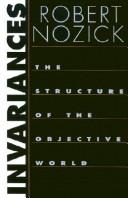 Invariances2001
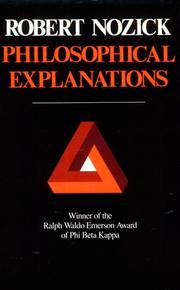 Philosophical Explanations1981
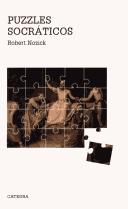 Puzzles Socraticos (Teorema Serie Mayor)1997
 La Naturaleza De La Racionalidad1993
- The normative theory of individual choiceThe normative theory of individual choice1963
- Names and Nature in Plato's CratylusNames and Nature in Plato's Cratylus2001
 The Emergence of Logical Empiricism : From 1900 to the Vienna Circle (Science and Philosophy in the Twentieth Century: Basic Works of Logical Empiricism)1996
- The Nature of RationalityThe Nature of Rationality1993
- 生のなかの螺旋生のなかの螺旋1993