About this book
Four experiments demonstrated that recalling memories from one's own childhood lead people to experience feelings of moral purity and to behave prosocially. In Experiment 1, participants instructed to recall memories from their childhood were more likely to help the experimenter with a supplementary task than were participants in a control condition, and this effect was mediated by self-reported feelings of moral purity. In Experiment 2, the same manipulation increased the amount of money participants donated to a good cause, and self-reported feelings of moral purity mediated this relationship. In Experiment 3, participants who recalled childhood memories judged the ethically-questionable behavior of others more harshly, suggesting that childhood memories lead to altruistic punishment. Finally, in Experiment 4, compared to a control condition, both positively-valenced and negatively-valenced childhood memories led to higher empathic concern for a person in need, which, in turn increased intentions to help.
Books like Memory lane and morality
More by Francesca Gino
 Rebel talent2018
 Sidetracked2013
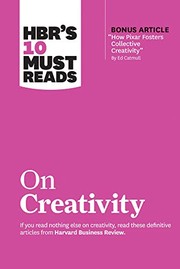 HBR's 10 Must Reads on Creativity2021
- Advice for Working Moms (HBR Working Parents Series)Advice for Working Moms (HBR Working Parents Series)2021
- HBR's 10 Must Reads on Creativity (with Bonus Article How PiHBR's 10 Must Reads on Creativity (with Bonus Article How Pixar Fosters Collective Creativity by Ed Catmull)2020
- HBR's 10 Must Reads on Lifelong Learning (with Bonus ArticleHBR's 10 Must Reads on Lifelong Learning (with Bonus Article the Right Mindset for Success with Carol Dweck)2021
 Aklinizi Celdirmeyin2018
- See no evilSee no evil2008
- No harm, no foulNo harm, no foul2008
- Letting misconduct slideLetting misconduct slide2009
- R&D portfolio strategy diversification and performanceR&D portfolio strategy diversification and performance2006
- Getting advice from the same source but at a different costGetting advice from the same source but at a different cost2004