First published 2005 · 384 pages · about 6 hours to read
About this book
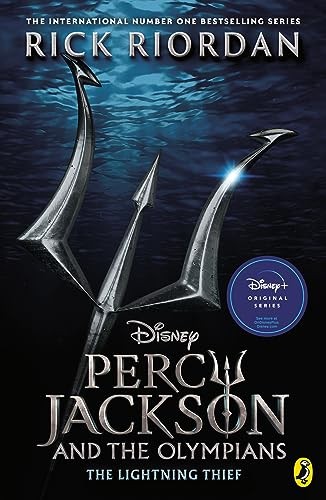
Twelve-year-old Percy Jackson is on the most dangerous quest of his life. With the help of a satyr and a daughter of Athena, Percy must journey across the United States to catch a thief who has stolen the original weapon of mass destruction—Zeus’ master bolt. Along the way, he must face a host of mythological enemies determined to stop him. Most of all, he must come to terms with a father he has never known, and an Oracle that has warned him of betrayal by a friend.
Who it's for
Young readers and fantasy fans who enjoy fast-paced urban adventures will like this book. Its sarcastic narrator and imaginative reinvention of Greek myths across modern American landmarks keep the plot engaging.
- greek mythology
- found family
- heroic quests
- neurodiversity
Written by BookSense's AI from what's known about the book. It can get details wrong. How BookSense works
Books like The Lightning Thief
The Thief
Megan Whalen TurnerA sly, mischievous thief goes on a quest through a Greek-inspired world of gods, myths, and political intrigue, much like Percy's journey through the myths.
The Mysterious Benedict Society (The Mysterious Benedict Society #1)
Trenton Lee StewartGifted kids on a secret mission with puzzles, danger, and wry humor capture the same fast, witty, quest-driven feel as The Lightning Thief.
Keeper of the Lost Cities
Shannon MessengerA young heroine discovers a hidden magical world and her own unusual powers, with a fast pace and a mix of adventure and friendship similar to Percy's story.
Gregor the Overlander
Suzanne CollinsA boy falls into a hidden underground world of giant creatures and prophecy, and must lead a quest, mirroring Percy's reluctant-hero adventure.
On these lists
Reader's guide
Themesidentity and self-worth, parental neglect and legacy, ancient myths in modern life, loyalty and betrayal, fate and individual choice
identity and self-worth · parental neglect and legacy · ancient myths in modern life · loyalty and betrayal · fate and individual choice
StyleWritten in the first person from Percy's humorous, conversational, and sarcastic point of view. The story uses an episodic road-trip structure across twenty-two chapters with comedic titles, moving quickly from one action sequence to the next.
Written in the first person from Percy's humorous, conversational, and sarcastic point of view. The story uses an episodic road-trip structure across twenty-two chapters with comedic titles, moving quickly from one action sequence to the next.
How it was writtenRick Riordan originally invented the story as a series of bedtime tales for his son Haley, who had received diagnoses of ADHD and dyslexia. Riordan framed those conditions as signs of ancient demigod heritage to empower his son, writing the novel while teaching middle school English and history in Texas.
Rick Riordan originally invented the story as a series of bedtime tales for his son Haley, who had received diagnoses of ADHD and dyslexia. Riordan framed those conditions as signs of ancient demigod heritage to empower his son, writing the novel while teaching middle school English and history in Texas.
How it was receivedThe novel was a commercial hit that spent years on the New York Times bestseller list and won the Mark Twain Readers Award along with numerous state library accolades. It revitalized Greek mythology for young audiences, established a major multi-series universe, and was adapted into a feature film, a Broadway musical, and a streaming television series.
The novel was a commercial hit that spent years on the New York Times bestseller list and won the Mark Twain Readers Award along with numerous state library accolades. It revitalized Greek mythology for young audiences, established a major multi-series universe, and was adapted into a feature film, a Broadway musical, and a streaming television series.
Questions to discussHow does the story reframe neurodiversity, such as ADHD and dyslexia, as strengths rather than deficits?
These may talk about the whole book.
- How does the story reframe neurodiversity, such as ADHD and dyslexia, as strengths rather than deficits?
- In what ways do the gods mirror absent or flawed human parents, and how does Percy's reaction to Poseidon compare to Luke's reaction to Hermes?
- Why does the concept of the Mist matter to the narrative, both practically for hiding monsters and thematically regarding how society ignores uncomfortable truths?
- Was Luke's anger at the Olympian gods justified, even if his alliance with Kronos was destructive?
- How does the novel adapt ancient Greek monsters and settings to twentieth-century American geography?
Written with AI from what's known about the book.
More by Rick Riordan
- Heroes of OlympusHeroes of Olympus2011
- The Lost HeroThe Lost Hero2010
- Percy Jackson and the Last OlympianPercy Jackson and the Last Olympian2008
- Percy Jackson and the Titan's CursePercy Jackson and the Titan's Curse2007
- The Sea of MonstersThe Sea of Monsters2005
- Percy Jackson and the Olympians: The Battle of the LabyrinthPercy Jackson and the Olympians: The Battle of the Labyrinth2005