
Cicero
Born 106 BC · Died 43 BC
From Arpino, Lazio, Italy · Nationality: Ancient Rome · Writes nonfiction
Marcus Tullius Cicero (pronounced /ˈsɪsɨroʊ/; Classical Latin: [ˈkikeroː]; January 3, 106 BC – December 7, 43 BC) was a Roman philosopher, statesman, lawyer, political theorist, and Roman constitutionalist. He came from a wealthy municipal family of the equestrian order, and is widely considered one of Rome's greatest orators and prose stylists.
He introduced the Romans to the chief schools of Greek philosophy and created a Latin philosophical vocabulary (with neologisms such as humanitas, qualitas, quantitas, and essentia) distinguishing himself as a linguist, translator, and philosopher. An impressive orator and successful lawyer, Cicero thought that his political career was his most important achievement. Today, he is appreciated primarily for his humanism and philosophical and political writings. His voluminous correspondence, much of it addressed to his friend Atticus, has been especially influential, introducing the art of refined letter writing to European culture. Cornelius Nepos, the 1st-century BC biographer of Atticus, remarked that Cicero's letters contained such a wealth of detail "concerning the inclinations of leading men, the faults of the generals, and the revolutions in the government" that their reader had little need for a history of the period. Cicero's speeches and letters remain some of the most important primary sources that survive on the last days of the Roman Republic.
During the chaotic latter half of the first century B.C.
Quotes
“Si hortum in bibliotheca habes, deerit nihil.”
If you have a garden and a library, you have everything you need. “Parvi enim sunt foris arma, nisi est consilium domi.”
De Officiis – On Duties 44 BC “Cedant arma togae, concedat laurea laudi.”
De Officiis – On Duties 44 BC “Hoc qui non videt, excors; qui, cum videt, decernit, impius est.”
Philippicae – Philippics 44 BC “Cuiusvis hominis est errare, nullius nisi insipientis in errore perseverare; posteriores enim cogitationes, ut aiunt, sapientiores solent esse.”
Philippicae – Philippics 44 BC
Quotes from Wikiquote (CC BY-SA 4.0).
Books by Cicero in order
Books by Cicero in the order they were published, from De Officiis (1465) to How to Win an Argument (2016).
- 1De Officiis
 De Officiis1465
- 2De finibus bonorum et malorum
 De finibus bonorum et malorum1471
- 3The Stranger Next Door
 The Stranger Next Door1475
- 4Cato Maior De Senectute
 Cato Maior De Senectute1481
- 5The Treatises of M.T. Cicero
 The Treatises of M.T. Cicero1493
- 6Select Orations of M. Tullius Cicero
 Select Orations of M. Tullius Cicero1499
- 7Letters of Cicero
 Letters of Cicero1510
- 8De Amicitia
 De Amicitia1511
- 9The Letters of Marcus Tullius Cicero to Several of His Frien
 The Letters of Marcus Tullius Cicero to Several of His Friends1519
- 10Second Philippic
 Second Philippic1521
- 11The Letters to His Friends
 The Letters to His Friends1531
- 12Cicero's Tusculan Disputations
 Cicero's Tusculan Disputations1539
- 13The Life and Letters of Marcus Tullius Cicero
 The Life and Letters of Marcus Tullius Cicero1544
- 14On the Commonwealth
 On the Commonwealth1553
- 15De Natura Deorum
 De Natura Deorum1718
- 16De Oratore
 De Oratore1755
- 17Cornifici Rhetoricorum Ad C. Herennium, Libri IIII
 Cornifici Rhetoricorum Ad C. Herennium, Libri IIII1854
- 18Cicero
 Cicero1881
- 19On Government
 On Government1993
- 20On Obligations
 On Obligations2000
- 21Cicero on the Ideal Orator
 Cicero on the Ideal Orator2001
- 22On a Life Well Spent
 On a Life Well Spent2005
- 23How to Run a Country
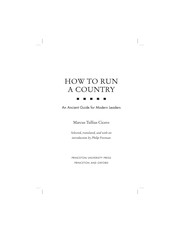 How to Run a Country2013
- 24How to Win an Argument
 How to Win an Argument2016